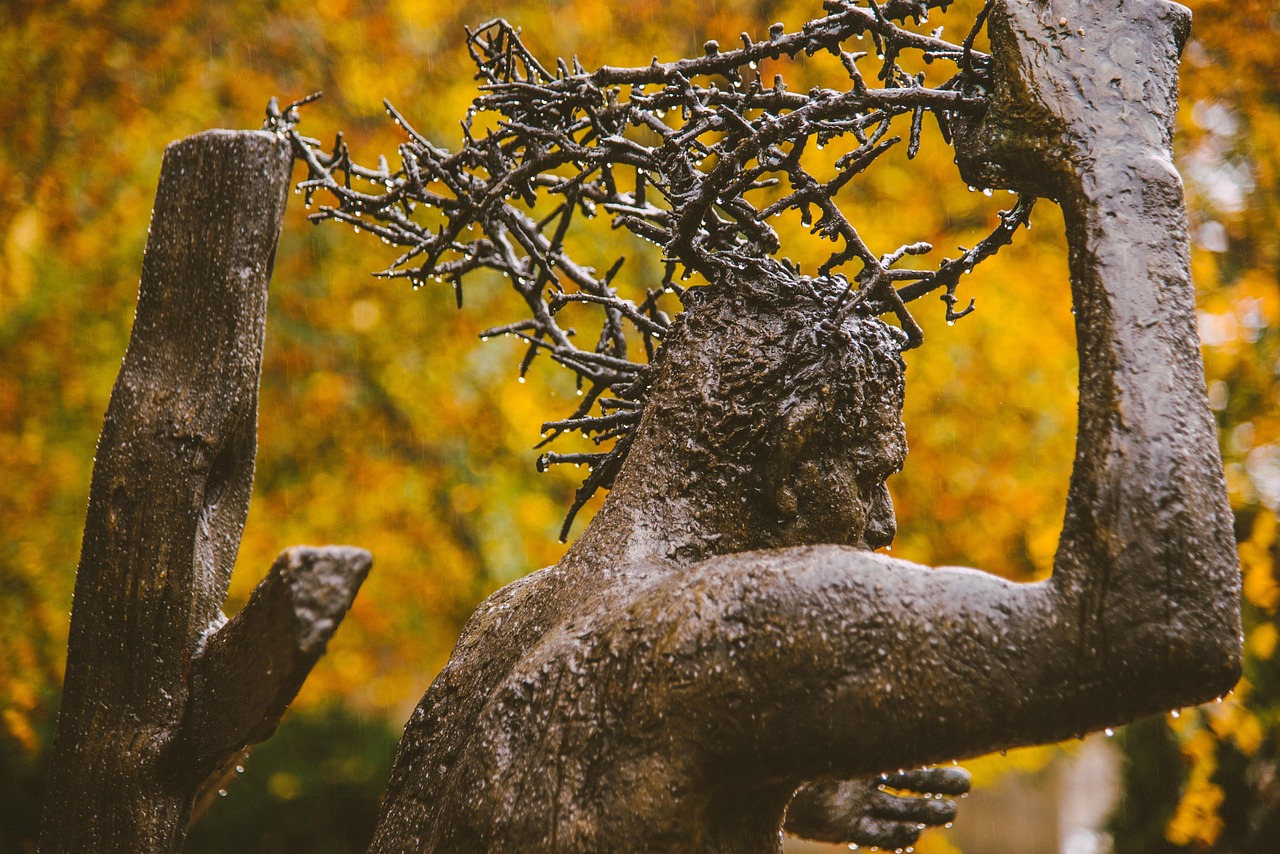
There are features of the Christian imagination that are rarely discussed in public, yet they shape how believers feel and practise their faith. They sit in plain sight in Scripture, hymns and art, and they bind together ideas that modern readers tend to separate: suffering, surrender, obedience and love.
Christianity has never been a disembodied religion. From Israel’s sacrificial life to the Incarnation itself, God meets His people in the physical world. “The Word became flesh and made his dwelling among us” (John 1:14). And that flesh is not protected from pain. It is pierced, exposed and crucified.
In the Old Testament, devotion involved blood, touch and proximity. Sacrifice was not cruelty for its own sake, but a costly sign of belonging and atonement. Life was returned to the One who gave it. Covenant faithfulness was not only emotional or moral; it was bodily.
The New Testament reshapes this tradition around Jesus. When He calls Himself the Good Shepherd, He speaks of a love that is chosen and poured out: “The good shepherd lays down his life for the sheep” (John 10:11). The cross, a tool of torture and humiliation, becomes the centre of Christian proclamation. Paul declares, “I resolved to know nothing… except Jesus Christ and him crucified” (1 Corinthians 2:2).
For centuries the Church has dwelt on this reality. Our prayers and hymns linger on Christ’s wounds, His obedience and His endurance. Believers contemplate a suffering Saviour not out of morbidity, but because the cross reveals both the cost and character of divine love.
Yet these images raise questions Christians often feel but struggle to voice. Why does the language of surrender and self-giving move us so deeply? Why do images of vulnerability and sacrifice carry emotional charge? Part of the answer lies in the simple truth that human beings are not neutral observers. We feel what we see. Desire, attachment, longing and fear come from the same interior places that shape both spirituality and sexuality. They are not identical, but they arise from the same depths where trust and intimacy are learned.
The mystical tradition makes this overlap easiest to see. Writers such as Bernard of Clairvaux and Julian of Norwich reach for the language of longing and union to describe communion with God. Julian even speaks of Christ as both mother and lover, not to eroticise faith but to convey its closeness. Divine love, they insist, is experienced, not merely assented to.
Even so, Christian theology draws careful lines. Suffering itself is not a virtue. Pain is not redemptive simply by being painful. Jesus does not glorify violence or domination; He absorbs and defeats them. “No one takes my life from me… I lay it down of my own accord” (John 10:18). This marks the difference between sacrifice and abuse: freedom.
This distinction matters pastorally. When obedience is severed from love, or when suffering is treated as a condition for divine acceptance, the Gospel is distorted. At points in history Christian imagery has been misused to excuse control or harm. Such uses stand far from the Christ who says, “Come to me, all you who are weary and burdened, and I will give you rest” (Matthew 11:28).
To ignore these dynamics, however, is also a mistake. Believers need language for their interior responses. Many Christians recognise a resonance in themes of surrender and devotion but do not know how to name it. Others feel unease without understanding why. Honest reflection enables discipleship rather than obstructs it.
It is here that the headline’s vocabulary becomes useful rather than provocative. In modern psychological discourse, “sadomasochistic” refers not simply to erotic practices, but to structured dynamics of power, vulnerability and desire. To note parallels does not collapse faith into sexuality, nor does it moralise or sensationalise. It observationally names a shared structure: surrender, trust and the giving of the self under conditions of consent.
In the erotic sphere, such dynamics seek pleasure. In Christian devotion, they seek communion. The parallels are structural, not moral, but their recognition helps explain why the imagery of wounds, obedience and sacrifice has carried such psychological and spiritual weight in the Christian imagination. Far from being evidence of pathology, such resonance reveals that Christianity speaks to the deepest and most complex regions of human experience.
What emerges is a faith that neither suppresses desire nor indulges it without discernment. Christianity does not erase the human self; it transforms it. Paul writes, “I have been crucified with Christ and I no longer live, but Christ lives in me” (Galatians 2:20). The self is not annihilated but reoriented toward love that gives life rather than consumes it.
This is also what distinguishes Christian devotion from caricatures of masochism or self-negation. The Christian end is not suffering but communion. The cross leads to resurrection. Christ’s wounds are not fetishised; they become signs of mercy. When the risen Jesus appears to His disciples, He says, “Peace be with you,” showing His hands and side (John 20:19–20). The wounds remain, but their meaning has changed.
For the Church today, the task is not to sanitise this inheritance nor to celebrate it uncritically, but to teach it wisely. That means speaking clearly about dignity and freedom, naming abuses where they have occurred, and giving believers space to explore how desire and devotion interact in real lives.
The Christian story ends not in death but in restoration. At its best, the faith does not exploit the human longing to be known and loved. It redeems it.
( Photo: Pixabay Library 📸 )
—
Duncan Williams is outreach director for the Christian Free Press. He previously worked with Son Christian Media in the UK and Recovery Network Radio in the United States. An ordained minister and long-standing member of Christians in Media, he has authored self-help materials and workbooks to assist in healing from trauma and addiction.